SPRINGS IN THE DESERT: Claiming Your Full Inheritance as a Kingdom Executive Conquering Your Canaan
Introduction: The Water Crisis Every Leader Faces
You’ve secured the territory. The deal closed. The promotion came through. You’re standing on the land God promised—but something feels dry. The resources aren’t flowing. The vision isn’t flourishing. You’re winning battles but wondering why the victory feels so parched.
This is the hidden crisis facing kingdom executives in business today: we’ve learned to conquer, but we haven’t learned to claim our full inheritance. We fight for market share, yet neglect the springs that make the land productive. We chase KPIs while our souls thirst for deeper blessing.
Joshua 15:16-19 captures this exact moment. Caleb offers his daughter Achsah to whoever captures Kiriath Sepher. Othniel succeeds, wins the bride, and receives land in the Negev—the dry southland. But Achsah does something extraordinary: she dismounts her donkey, approaches her father, and asks, “Give me a blessing. You have given me land in the Negev; give me also springs of water.” And Caleb gives her both the upper and lower springs.
Here’s the revelation: “Conquest is not completion.” Possession without provision is a setup for struggle. As a kingdom executive, you need more than territory—you need the springs that make the territory flourish. This post will unlock three New Covenant realities that transform how you claim your full inheritance in business.
The Othniel Principle — Partnership in Kingdom Conquest
When Two Become One in Business Warfare
Othniel wasn’t just a warrior; he was Caleb’s younger brother (Judges 3:9). This wasn’t a random mercenary capturing a city—it was family advancing family. The marriage to Achsah wasn’t merely romantic; it was covenantal alignment for territorial expansion.
New Covenant Reality: In the Kingdom, business is never solitary conquest. God designed expansion through covenant partnership. Too many kingdom executives operate as lone rangers, believing that independence equals anointing. But the pattern Scripture reveals is different:
- Moses had Aaron and Hur holding up his arms (Exodus 17:12)
- Paul had Silas, Timothy, Luke, and a network of co-laborers
- Jesus sent the disciples out two by two (Mark 6:7)
The Problem We Face: The entrepreneurial spirit in the church has been hijacked by worldly individualism. We celebrate the “self-made” executive while Scripture celebrates covenant covering and collaborative advancement. Othniel didn’t capture Kiriath Sepher for himself—he captured it within a family structure that honored inheritance and legacy.
Practical Application for Kingdom Executives:
- Audit Your Covenant Covering: Who is your Caleb? Who speaks into your life with fatherly wisdom? If you’re operating without spiritual and business mentorship, you’re vulnerable to conquest without consolidation.
- Evaluate Your Partnership Alignment: Is your business structure built on covenant or contract? Contracts protect; covenants produce. Kingdom business thrives when partnerships are rooted in shared Kingdom vision, not merely profit-sharing agreements.
- Redefine Success Metrics: Othniel’s success wasn’t measured by personal wealth but by family inheritance. What legacy metrics are you tracking beyond revenue? Are you building something that outlives you?
The Achsah Factor: Notice that Achsah wasn’t passive in this conquest. She was given as a prize, yet she became a co-strategist. Kingdom executives must honor the full partnership of those God brings alongside them—spouses, co-founders, key team members. Their insight often carries the key to unlocking additional blessing.
“Two are better than one because they have a good return for their labor. For if either of them falls, the one will lift up his companion.” — Ecclesiastes 4:9-10 (NASB)
The Achsah Initiative — Bold Asking in the New Covenant
Why Most Executives Die with Their Blessings Unclaimed
Achsah’s story contains one of the most overlooked leadership lessons in Scripture: “she asked.” She didn’t wait for Caleb to offer. She didn’t assume the land was enough. She recognized what was missing and boldly requested it.
The text says she “dismounted from her donkey”—a deliberate action signifying respect, intentionality, and preparedness for a serious conversation. This wasn’t a casual ask; this was a strategic petition.
New Covenant Reality: Under grace, asking is not presumption—it is partnership with God’s generosity.
The Orphan Spirit vs. The Sonship Spirit
Here’s where many kingdom executives get stuck: the orphan spirit says, “I must earn everything. I shouldn’t ask. I need to prove myself.” The sonship spirit says, “My Father owns the cattle on a thousand hills. I have access. I can ask.”
Jesus made this explicit: “Ask, and it will be given to you; seek, and you will find; knock, and it will be opened to you.” (Matthew 7:7, NASB)
Yet we operate our businesses with orphan consciousness:
- We overwork instead of asking for divine strategy
- We bootstrap when God has resources ready to release
- We accept dry seasons when springs are available
What Are Your Springs?
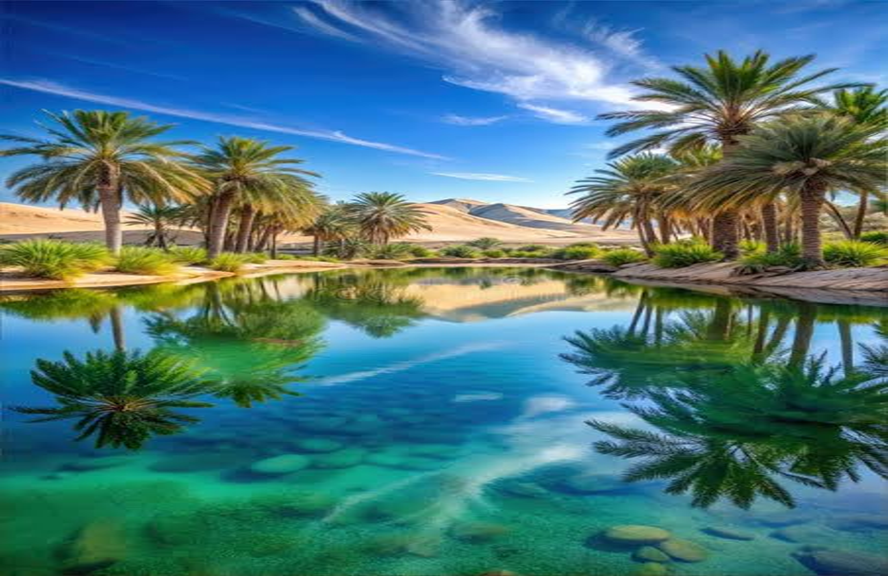
When Achsah asked for springs, she wasn’t being greedy—she was being wise. The Negev was arid land. Without water, the territory’s potential was capped. Springs represented:
- Sustained productivity: (not just one-time harvest)
- Independence from external dependency: (own water source)
- Generational wealth: (springs outlast seasons)
- Strategic advantage: (water = power in ancient economies)
For the Kingdom Executive, springs translate directly to core business equivalents:
| Ancient Spring | Modern Business Equivalent |
|---|---|
| Water source | Cash flow systems |
| Irrigation | Scalable processes |
| Sustainability | Recurring revenue |
| Life-giving | Kingdom impact metrics |
| Upper & Lower | Multiple revenue streams |
The Bold Ask Framework:
- Identify the Gap: Achsah knew what was missing. Conduct an honest audit: What resource, connection, capital, or wisdom would unlock your next level?
- Position in Honor: She dismounted. Approach your asks with humility, not entitlement. Honor those you’re asking—whether God, investors, mentors, or partners.
- Be Specific: She didn’t say, “Give me something nice.” She said, “Give me springs of water.” Clarity accelerates answers.
- Expect Abundance: Caleb didn’t give one spring—he gave upper AND lower springs. God’s economy is exceeding abundance, not scarcity.
Warning: The devil wants you to believe asking is weakness. In the Kingdom, asking is alignment with the Father’s heart to give.
“Now to Him who is able to do far more abundantly beyond all that we ask or think, according to the power that works within us.” — Ephesians 3:20 (NASB)
The Double Spring Strategy — Building Redundant Blessing Systems
Why One Stream Is Never Enough
Caleb’s response is telling: he gave her the upper springs AND the lower springs. This wasn’t accidental generosity—it was strategic wisdom.
Upper springs capture rainwater from higher ground—seasonal but pure. Lower springs tap into groundwater—consistent but requiring deeper access. Together, they create resilience. When one runs low, the other sustains. This is divine diversification.
New Covenant Reality: Kingdom executives must build redundant blessing systems that survive economic seasons.
The Single-Point Failure Trap
Too many kingdom businesses operate on single-point systems:
- One major client = 80% of revenue
- One platform algorithm = entire marketing strategy
- One product line = complete identity
- One geography = total market exposure
When that single point fails, the business enters wilderness season. Achsah understood: “Blessing redundancy is stewardship, not lack of faith.”
Building Your Upper and Lower Springs
Upper Springs (High-Visibility, Seasonal Opportunities):
- Launch campaigns and product drops
- Speaking engagements and conferences
- Viral marketing moments
- Strategic partnerships with high-profile players
- Investment rounds and funding events
These are your “rainwater” systems—exciting, visible, but variable.
Lower Springs (Deep Systems, Consistent Flow):
- Recurring revenue subscriptions
- Evergreen content and products
- Long-term contracts and retainers
- Intellectual property and royalties
- Investment portfolios and passive income
These are your “groundwater” systems—less glamorous, but reliable.
The Kingdom Executive’s Diversification Matrix:
| Margin / Touch | High Touch | Low Touch |
|---|---|---|
| High Margin | Premium Consulting | Digital Products |
| Low Margin | Volume Services | Automation Systems |
Case Study: A kingdom executive running a consulting firm might have:
- Upper spring: High-ticket intensive workshops (seasonal, high-visibility)
- Lower spring: Online course with evergreen enrolment (consistent, automated)
- Upper spring: Keynote speaking circuit (relationship-driven, variable)
- Lower spring: Book royalties and licensing (passive, cumulative)
When the workshop season slows, the course sustains. When speaking slows, royalties continue. This is Achsah wisdom applied to modern business.
The Spiritual Dimension of Diversification
Some preach, “Put all your eggs in one basket and watch God protect it.” This confuses faith with foolishness. Scripture celebrates wisdom and faith:
“The plans of the diligent lead surely to abundance, but everyone who is hasty comes only to poverty.” — Proverbs 21:5 (NASB)
Diversification isn’t distrust—it’s diligence. Joseph stored grain in seven years of plenty for seven years of famine (Genesis 41). This wasn’t lack of faith; this was prophetic preparation.
Practical Steps:
- Map Your Current Springs: List every revenue stream. Categorize as upper (seasonal/variable) or lower (consistent/recurring).
- Identify the Gap: Are you over-dependent on one type? Most executives lean heavily toward upper springs—exciting but unstable.
- Build One Lower Spring This Quarter: What system could you create that generates income while you sleep? Digital product? Licensing? Investment?
- Consecrate Your Springs: Present your business systems to God in prayer. Ask Him to infuse them with Kingdom purpose and supernatural sustainability.
“Give a portion to seven, or even to eight, for you do not know what disaster may happen on earth.” — Ecclesiastes 11:2 (NASB)
Conclusion: From Conquest to Flourishing
The story of Achsah and the springs of water is not an ancient footnote—it’s a blueprint for kingdom executives ready to move beyond survival into thriving inheritance.
Three truths to carry forward:
- Partnership Multiplies Conquest: Othniel didn’t win alone. Covenant relationships accelerate territorial advancement. Build your kingdom business within covering, not in isolation.
- Bold Asking Unlocks Blessing: Achsah received because she asked. The Father’s heart is to give. Release orphan consciousness and operate from sonship confidence.
- Redundancy Ensures Resilience: Upper and lower springs together create unshakeable sustainability. Diversify your blessing streams with Kingdom wisdom.
You’ve captured your Kiriath Sepher. You’ve secured the land. But the question remains: “Will you settle for dry territory, or will you dismount, approach the Father, and ask for the springs that make the desert bloom?”
The inheritance is yours. The springs are available. The blessing is waiting.